Founder’s Note
Last week’s inflation report changed the conversation. Consumer prices rose 3.7% in the year to September, up from 3.4% in August, and the core measure that leaves out food and energy rose to 2.6% from 2.4%. The Fed meets on October 27 and 28, and for anyone who borrows, the question is how long rates stay where they are, or whether they rise from here.
In real estate, the rate that hurts is the one a property has to refinance at. Newmark counts $179 billion of low-rate loans maturing through 2028, and about 78% of the fixed-rate securitized debt coming due in that window carries a rate well below today’s 10-year Treasury yield, which recently went past 5%. Those loans were written when debt was cheap and prices were high. When they come due, owners refinance at today’s rates, bring in more equity, or sell.
My read: before you invest, ask when the debt comes due and what the deal looks like at today’s rates.
This Week in Markets
1. Manhattan office vacancy hits its lowest since before 2020
Total office vacancy in Manhattan fell to 12.6% in the third quarter, from 13.1% in the spring and 14.7% a year ago, according to JLL. Trophy vacancy fell to a cycle low of 4.9%, per JLL, and Colliers counts leasing above 10 million square feet for a fourth straight quarter.
Why it matters: The recovery starts at the top. With the best buildings nearly full, tenants are widening their search to the next tier, which is how demand reaches older offices. Whether it reaches a given building depends on how close it sits to the top of that ladder.
Source: JLL
2. September sales rose, mostly at the gas pump
Retail sales rose 0.8% in September, the Commerce Department reported Thursday, though gas prices climbed more than 6% in the month. The control group, which strips out gas, autos and building materials, rose just 0.1%, and after inflation, sales volumes barely moved. Restaurants stood out, up about 7% from a year ago.
Why it matters: For shopping center owners, a strong headline can hide flat traffic. Tenants that sell food, fuel and everyday needs are holding up. Rent that depends on discretionary spending deserves a closer look at each tenant’s own sales.
Source: TD Economics
3. Self-storage’s widest pricing gap has started to close
At Public Storage, existing customers paid about 41% more than the advertised street rate in the second quarter, against 11% in early 2020, according to Capright. That spread has now narrowed for two straight quarters, and occupancy across the four listed storage REITs averaged 92.4%. Their 2026 guidance has revenue growing 0.8% and expenses 2.7%.
Why it matters: Storage income has leaned on raising rents for customers who rarely move out. As that gap narrows, growth has to come from new customers paying more, and with costs rising faster than revenue, the margin for error is thin.
Source: Capright
The Take
Most private real estate business plans rest on a loan, and every loan has a date. When it arrives, the property refinances, sells or asks its investors for more money. For deals financed when rates were near their lows, that date is arriving at rates well above the ones the plan assumed, and CMBS delinquency reached 8.02% in September, according to Trepp.
Higher rates do not make a deal bad. Debt that comes due at the wrong moment can. Three questions show how exposed a deal is.
One. Ask when the debt comes due. Get the maturity date of every loan, and any extension options with their conditions. A loan that matures before the planned exit means a refinance in the middle of the hold, at whatever rates exist then.
Two. Ask what the deal looks like at today’s rates. If the plan depends on a refinance or a sale, ask the sponsor to show the numbers at current rates, not hoped-for ones. A plan that only works if rates fall is a bet on rates.
Three. Ask what happens if the cash comes up short. When a refinance brings in less than the loan it replaces, someone has to fill the gap. Ask whether the documents allow capital calls, who funds them, and what happens to investors who do not.
None of this means waiting for rates to fall before investing. Plenty of good deals are financed in high-rate years. The test is whether the plan still works at the rates that exist today, and whether you know the dates it depends on. Target returns remain targets, and past performance does not predict future results.
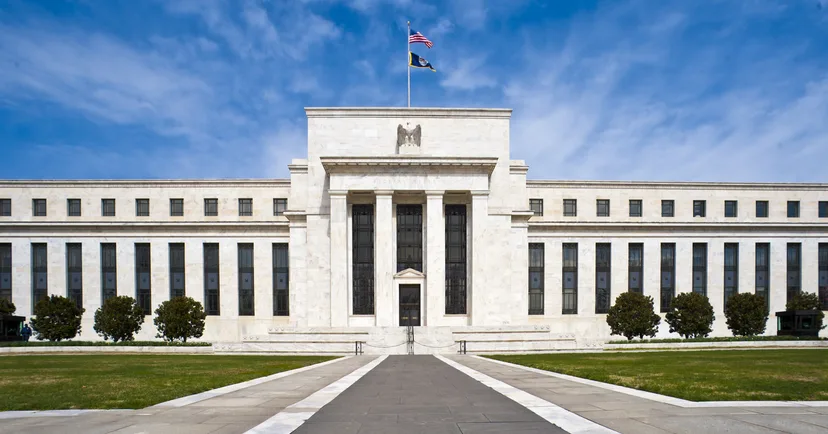
The Marriner S. Eccles Federal Reserve Board Building in Washington. Photo: Federal Reserve, Public domain, cropped.