Founder’s Note
Two deals last week came at the same question from opposite ends. In downtown Los Angeles, the $290 million loan on Wells Fargo Center South, a 45-story office tower about 42% leased, was sold at a discount to a new buyer. And Apollo plans to put $1.34 billion into 19 of UDR’s apartment communities, with UDR keeping a third of the venture and running the buildings.
The first shows what a loan is worth when the building behind it is less than half leased: the seller took a known loss and handed the problem to a buyer who believes it can fill the space. The second is one of the world’s largest investment firms paying for buildings and an operator together, with the operator’s own money staying in. Neither price was only about the property. Both were about who would do the work next.
My read: before you invest, ask who does the work, and whether they have done this exact work before.
This Week in Markets
1. A $290 million loan on an LA office tower sells at a discount
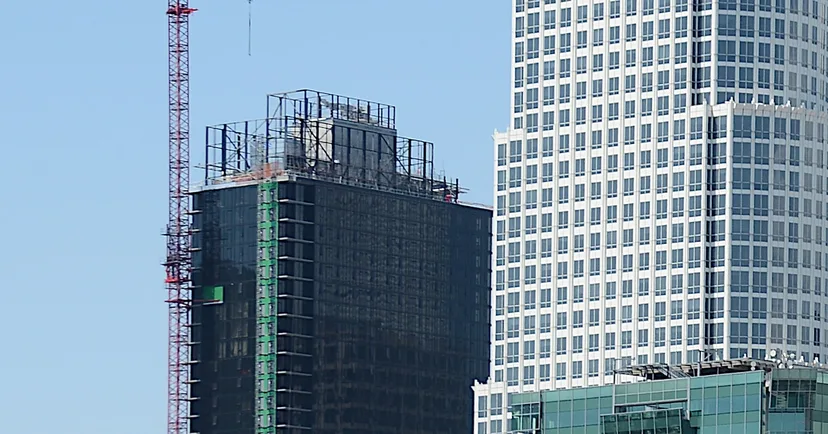
Newmark arranged the discounted sale of the $290 million loan on Wells Fargo Center South, a 45-story Class A tower of about 1.16 million square feet on Bunker Hill in downtown Los Angeles, for an undisclosed seller. The building was about 42% leased at the time of the sale. The buyer is an affiliate of Kam Sang Company.
Why it matters: Whoever sells a loan below face value is choosing a known loss over waiting on the building. The buyer is betting it can fill space the current plan has not. In office today, the value sits with whoever can lease it.
Source: Connect CRE
2. Apollo buys into UDR apartments, and UDR keeps running them
Apollo-managed funds will invest $1.34 billion for about two-thirds of a $2 billion venture holding 19 UDR communities with 7,059 apartments. UDR keeps a one-third stake, keeps managing the properties for a fee, and can buy Apollo out from year five at an expected 7.00% to 7.50% fixed return. The price implies a cap rate of about 6%.
Why it matters: Large investors are still buying apartments, at close to 6% on income. The deal keeps the manager that knows the buildings, with its own money still in them.
Source: UDR
3. Mortgage rates ease ahead of Wednesday’s Fed decision
The average 30-year fixed mortgage rate fell to 7.32% last week from 7.40%, Freddie Mac reported Thursday, still more than a point above the 6.19% of a year ago. The 15-year rate fell to 6.68%. The Fed meets Tuesday and Wednesday, after raising its benchmark rate in September for the first time since 2023.
Why it matters: Mortgage rates decide how much buyers can pay for a home, and they move with the cost of borrowing across real estate. One week’s dip does not change the picture. A plan should still work at today’s rates.
Source: Freddie Mac
The Take
Every private real estate deal is a set of jobs: find the property, buy it at the right price, fix it or build it, lease it, run it and sell it. A presentation shows the result of those jobs. It rarely shows who does each one, and that is usually where a plan succeeds or falls short.
Apollo’s deal with UDR shows a large investor pricing the operator along with the buildings. Three questions bring the same habit to any deal you look at.
One. Ask who does each job. For every step in the plan, ask whether the sponsor’s own team does it or hires someone. Neither answer is wrong, but hired work needs someone watching it, and a sponsor who does the work itself answers for the result directly.
Two. Ask when they last did this exact work. Renovating homes, building new ones and leasing offices are different trades. Ask for recent projects of the same type and size, in the same market, and how each one finished against its schedule and budget.
Three. Ask what happens when it runs late. Every plan has a schedule, and most slip at some point. Ask who carries the cost of a delay, how a longer project is paid for, and how investors hear about it.
Large investors do this as a matter of routine: they back people as much as properties. Individual investors can ask the same questions, and a good sponsor will welcome them. Target returns remain targets, and past performance does not predict future results.
Towers and a construction crane on Bunker Hill in downtown Los Angeles. Photo: Benoît Prieur, CC0, cropped.

