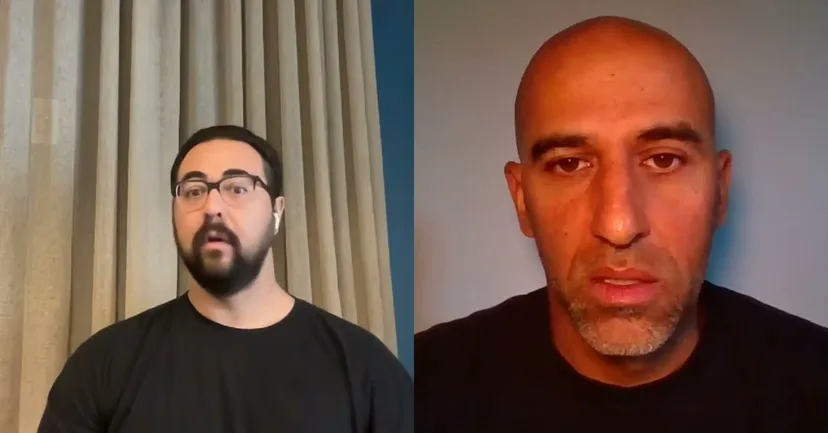
Relli co-founder and CEO Mor Milo joined Faisal Morsi on the Pinpoint Investor Podcast to explain how Relli helps investors find and compare passive real estate offerings, and how it vets the sponsors behind them. They cover how Relli makes money without taking equity or commissions, what goes into vetting a sponsor, why investing always carries risk, Mor's earlier startups and where AI does and doesn't help today. The episode, "Ep. 21 How Relli Is Changing The Way Investors," was released November 26, 2025 and runs 45 minutes.
Editor's note: first published November 2025, so some details have changed. Today Relli is a marketplace where investors review offerings from reviewed sponsors, express interest and talk to each sponsor directly, and each offering page shows its own minimum. Target returns are projections, not guarantees.
Watch on YouTube.
Key takeaways
- Relli started from a simple frustration: Mor and co-founder Ross Iannarelli wanted to compare passive real estate offerings in one place and couldn't, so they built a marketplace where investors can review offerings and sponsors side by side.
- Investors use Relli for free. Sponsors pay a service fee for marketing, and Relli takes no equity, commissions or share of a deal's profits, so it can choose sponsors on quality alone.
- Vetting looks at exits and transactions in the last five years, how relevant they are to the current offering, and whether the documents and financials hold up. Mor says most sponsors who apply don't qualify.
- No investment is free of risk, and no platform can promise you won't lose money. Mor's view is that open listings and verifiable track records give investors a better chance.
- On AI, Mor uses off-the-shelf tools where they work today, such as reviewing marketing material against SEC rules, and expects a second wave of better products after the hype settles.
Full transcript
Lightly edited for clarity, with a few short passages removed. Section times match the YouTube video.
Welcome (0:00)
Faisal Morsi: Hi. Welcome to another episode of the Pinpoint Investor Podcast with Faisal Morsi. I'm your host, Faisal Morsi. As always, we are brought to you by Pinpoint Skip. Check out our motivated seller list at PinpointSkip.com. Today's guest is Mor Milo with Relli, a platform I'm looking forward to digging deeper into. If you're a real estate investor, this is the right hour for you. So thanks for being on, Mor.
Mor Milo: My pleasure. Thanks for having me.
Faisal Morsi: All right. Just to give people a caveat, you're in a hotel room right now and traveling, but you made time for me. So I appreciate it.
Mor Milo: Yeah, absolutely. And my apologies for the not-as-pretty background. Normally I'd have a very pretty background with an aesthetic picture in the frame and all the things. But I'm actually in Dallas right now. We're getting ready to ramp up a new marketing campaign for a very interesting investment here in Dallas, Texas that we're excited about: two multifamily offerings underneath one fund, where our investors will have access to over 500 units, with a sponsor that is incredibly well-rounded, has a 20-year track record and is assuming a 2.2% interest rate from the previous seller. So it's a very, very lucrative deal. We're super excited to get it on the board. I had to jet over to Dallas as quickly as I possibly could so we can get all this videography done. And here I am.
Faisal Morsi: Nice. Where are you based?
Mor Milo: I'm in Irvine, California.
What does Relli do, and how did it start? (1:33)
Faisal Morsi: Okay, nice. All right. You kind of gave people a little glimpse of what you do, but give people an idea of what you do, what Relli does and how you got to where you are.
Mor Milo: It's been a journey to get here, no doubt. I'm a four-time startup founder. I have a phenomenal business partner who's been with me through thick and thin through all of those previous startups. After three failed business attempts with partners that didn't work out, my ride-or-die business partner and I looked at each other and said, all right, let's figure something out together.
So we started looking at the market and realized that as retail investors, we didn't have access to passive real estate investments. We weren't considered accredited, and in the world we live in today, accredited investors are really the main audience for a real estate development firm's investment capital. What we wanted was a similar experience to what we had on the stock market, through companies like Fidelity or E*TRADE or Charles Schwab, or with cryptocurrency on Coinbase or Binance: an experience where we could manage a portfolio completely passively on an online platform, but with passive real estate investments of institutional grade and quality. And that didn't really exist.
When we started doing research, we discovered there were really only two camps that passive real estate investment companies used to attract investors. Either they were accredited investor platforms, limited to high net worth individuals and institutions, with a very narrow set of deals they were directly tied to, so they were trying to raise capital directly into those deals and they were biased. Or there were general partners who created what they call Regulation A offerings, which an average consumer can invest as little as $100 into. That's awesome, because an average Joe like me could invest, but you only had one asset manager to choose from, and usually only one, two or three types of assets, all within the same residential pool. So you didn't get to pick and choose the asset type, the amount of investment or the structure of the investment, because you were limited to whatever that one sponsor had to offer.
So we looked at the market and asked, what would we want to create? What we wanted to create was a stock market for real estate, where we could have that same type of experience. We went down the path of figuring out how to create an investment opportunity for the average consumer on our online platform. And what we discovered was that the real estate game is very antiquated. Most real estate developers live in 1999. The opportunity now is to bring them into the technological revolution of 2025, and they move slowly.
So to stay in business and start generating revenue so we could continue our vision, we had to meet our customers where they were. They weren't ready to go out to the public markets. They wanted help raising capital from the audience they were already trying to attract, which is the accredited investor. After interviewing well over 100 real estate investment sponsors with different types of assets all across the country, we concluded that instead of trying to push them directly into the public markets, we needed a kind of stomping ground for them to start building a relationship with our business.
So we decided to build out a marketplace that could deliver value not only to the real estate development firm looking to find new accredited investors. We also discovered that real estate investors looking to passively deploy their capital really had no place to go to find deals. They would have to go solicit them on LinkedIn, or talk to a buddy who would introduce them to someone. At that point you're investing because you know, like and trust the person, and that's great, but it doesn't give you variety in asset classes. It doesn't give you the ability to compare sponsors, their background and their track record of success. It doesn't let you compare different funds or syndications in the same asset class against one another, so you can understand what's better or worse.
So essentially we created a marketplace where investors can come and look at all the different deals on our marketplace completely for free. It's totally free to them. Passive investors also have access to us as a concierge. Just like when you call Amex to set up a flight, you can call Relli and we'll set up a meeting for you with the sponsor you'd like to invest with, or with many sponsors you want to learn about. Maybe you're not ready to invest, but you want to learn more about the different offerings. We're here to provide a white-glove concierge experience to passive investors, where we can show them a menu of deals, walk them through all the moving parts of those deals and describe the structure so they can understand them fully, in a no-pressure situation, without being sold, because we don't get commissions when they invest. Our only job is to connect them with the sponsor.
Then we deliver a super warm lead to our sponsor, who now has an engaged audience: someone interested in investing in their offering because they've looked at our menu of deals and chosen that deal, out of all the deals, as one they want to dig into. And the real estate sponsors pay us a consistent monthly recurring service fee, and we deliver them 20 to 50 leads every single month by turning on advertising spend and managing that spend on our platform. So it's a beautiful win-win. We get to help both sides of the table. And slowly but surely, we're seeing more of these real estate sponsors taking advantage of the public markets, and we're prepared to go out to an audience of investors looking to deploy capital, with a solution that helps sponsors advertise their passive investment to the audience they want to get in front of.
How does Relli make money? (8:21)
Faisal Morsi: All right. So the way you guys monetize it: anybody putting a deal out on your platform, are you charging them a monthly fee, or taking a piece of the equity in the deal? How does that work for you?
Mor Milo: No equity. Our goal is to be an unbiased party in this whole situation. Today, for the sake of de-risking the operation and building a foundation of 100 great customers who love our marketing services, we decided to focus on the marketing component of this engagement. Our focus is creating an amazing platform where our sponsors can advertise their deal, and then we can supercharge their advertising with lead generation campaigns and email outreach campaigns to targeted investors.
What that does for us is, number one, we charge for a service. The sponsors don't pay us a commission on the back end. There's no winning fee or commission of any kind. And they get great services for a very reasonable cost. We also do marketing campaigns, like what I'm doing out here in Dallas, for people who want a more aggressive strategy. If they're looking to generate a thousand leads in two months because they need to raise $50 million in 60 days, that's something we can help with, but it's not the same as the monthly recurring service where we're trying to get 20 to 50 leads every month for that sponsor. So there are different types of packages and services.
All of that being said, we have set up our business so that we don't take commissions. We don't take any GP splits. We don't take anything from the winnings of the deal, so that we can be unbiased. We can vet all of our sponsors based on whether we like the quality of their investment and the quality of their track record for our platform, not, "Hey, we need to sell something, so let's bring in this deal so we can go find investors and sell them on it." Does that make sense?
What kinds of offerings are on Relli, and how are sponsors vetted? (10:22)
Faisal Morsi: Yeah. Is it mainly commercial deals, or are you doing single-family, like flips, as well?
Mor Milo: We have a mixture of deals on the platform. You'd be surprised how many different types of offerings exist. Right now on our platform, I want to say we have something in the range of eight different asset classes you can choose from. That's single-family residential, multifamily syndications, double net and triple net lease retail with Walmarts and Starbucks and things of that nature. There are medical office facilities. There are debt investments, which are membership investments in debt funds, but also first-position lien investment opportunities. We have an oil and gas deal on the platform. So we are agnostic to the asset class or structure. Our goal is to find investments backed by hard assets, and to find investment managers with a proven track record of success.
In most cases, on the real estate side, we look for exits and transactions. How many exits have you had in the last five years? How relevant are they to the business you're looking to do right now, and to the investment opportunity you're going to deliver to the investors on our platform? Do your documents look kosher? Do your financials look within reason?
Obviously we can't guarantee an investment. We're not financial advisors. What we do is have our general counsel and our CFO dig through these deals and make sure they look solid. But we obviously can't judge whether they're going to turn out good or bad. What we can say is, okay, this sponsor has 20 years of experience. They have 10 exits. They have three funds under their belt. They're raising capital for their 10th deal. We feel confident that this is a real sponsor with a real track record of success who can deliver a service to our investors.
What does an offering page show investors? (12:29)
Faisal Morsi: And on your platform, are you giving the background of the actual sponsor and everything they've accomplished, and then also, here's the deal they have? So people are actually investing in the sponsor as well as the deal?
Mor Milo: That's correct. The way it works is we list an offering, and that offering is connected to the sponsor. The listing pages show you in depth what the offering is. They have documentation attached, so you can pull an offering memorandum or a private placement memorandum, or any individual addendums for that deal that describe the investment opportunity in more depth. The investor can also look at the sponsor. They can connect with them on LinkedIn and see what they're all about. There's information on their track record. What AUM do they have? What highlights are important about the sponsor? Are they audited annually? Do they have a third-party administrator? Things of that nature. The goal is to help these investors connect directly with sponsors without having to go find them, so they can focus their energy on due diligence and getting a feel for the deal, as opposed to finding a deal out in the ether of the marketplace.
Can any platform make real estate investing safe? (13:50)
Faisal Morsi: So everyone knows real estate investment is risky, whether that's commercial or single-family. There's no way to actually protect your investors, right? People going onto your platform and investing: you've done certain due diligence to hope everyone's protected and everything's above board, but there's really no way for anyone to know that it's free of risk, essentially, right?
Mor Milo: Well, I would definitely say that no investment is free of risk. Any investment you take on is going to have risk; otherwise it's not an investment. And from the perspective of guarantees, there are no guarantees in investments either. Even if you go to your Fidelity account, it's not FDIC insured. If you put your money into a stock or a bond or whatever, and it goes sideways, you're at risk. Now, do you have the ability to go after the sponsor, which is the business owner, or the business whose stock you purchased? Of course, there are going to be consequences to actions if there need to be consequences.
But what I'll say is this. The market that exists today for passive real estate investing is incredibly scattered and isolated, with sponsors who have small communities and each run in their own silos. And what you'll notice is that some of the best marketers in the space, with the biggest communities, can also be the least qualified operators. When you have these private communities, you don't have a lot of open dialogue with the marketplace, so it's more difficult to know whether someone is high quality or not.
Our goal is to take a business that was behind closed doors for many, many years and open up those doors. To us, that means taking the deals that were normally reserved for institutions in closed conference rooms, putting the sponsors who were in those conference rooms in front of massive communities, and letting the world decide whether they're qualified. Because once you get those deals in front of people, and people can engage with one another about the quality of their experience with that sponsor, you have an opportunity to separate the wheat from the chaff. When everything is behind closed doors, you're reliant on whatever that person in front of you is telling you.
To give you an example, one of the biggest things we wanted to incorporate, which we're now outsourcing to a group we're very excited about, is reviews. There is almost nowhere you can go to see reviews of real estate sponsors from limited partner investors about their experience: the sponsor's communication, the sponsor's actual returns compared with their projections, the team's ability to work together and overcome problems. There's no place for that.
Those are things that haven't existed, and I think they're scattered, just like the real estate developers are scattered in the way they do business. Our goal is really to centralize. We believe that if we can centralize everything, from communications with the community to listings and offerings that people can see in real time, open, not behind paywalls or sign-in windows, and if we can create a concierge service with an unbiased dialogue with LPs, where we educate them and they know they can come to us to be educated, then a few things happen.
Number one, from our perspective: as an early-stage company that just launched in April, we already get somewhere between four and eight leads every single week from real estate developers interested in listing their offerings, and the majority of those listings do not go on our platform because they don't qualify. So the more results we generate from these open investment opportunities, the more GPs come to us, the better we get at underwriting, the higher the quality of the sponsors that come through, and the fewer deals we need to do for our business to thrive.
In essence, we're creating a funnel to get the best-quality sponsors to the bottom of it. By putting their track record in front of everybody, listing reviews so people can see real experiences from real customers, and putting them in a marketplace where they're compared with others, they now have to compete with their neighbor, who might also have 10 or 20 years of track record and a very well-qualified offering. Now they have to differentiate and compete, and as we both know, competition in an open market creates higher-quality businesses. Right now, it's the Wild West.
Faisal Morsi: Agreed.
Mor Milo: And even though we can't guarantee a deal, by centralizing the communication, bringing both parties to one place and creating a process where only the highest-quality deals come through the bottom of the funnel, we inherently create credibility, improve transparency and reduce risk for investors, because now they have optionality. Unfortunately, I can't promise you that you're not going to lose money, because real estate is a risky game, but you'll have a better chance.
What is the minimum investment? (20:51)
Faisal Morsi: I don't know if you said: what is the minimum for someone to invest in deals?
Mor Milo: Right now, and this is a beautiful thing for us, we want to get it as low as possible. Our original goal was $100, and to do that, we have to go after a very particular kind of offering. Right now, among the offerings on our platform, the lowest minimum we have, I think, is two deals with a $25,000 minimum. However, we're talking with four or five different companies that have what's called a Regulation A offering, which is slightly different from what real estate developers use en masse today, which is Regulation D, aimed at higher net worth individuals called accredited investors. Regulation A allows average Joes like me to invest as little as $100, because it's a fully digital solution. There are quite a few companies out there with minimums of $1,000, $100 or $500 that we're looking to get on the platform. As soon as I have one, I'll let you know, but they're coming soon.
What were Mor's first startups? (21:55)
Faisal Morsi: All right. What were the first three companies you founded?
Mor Milo: The first three companies? Oh, that was fun. Okay. For the first one, I was brought into a startup called Pedal by my current business partner. His name is Ross Iannarelli. He's my ride-or-die. I'd been in the automotive industry for a few years and got very fed up. We met each other in the automotive industry, working for BMW. When I left, he approached me and said, "Hey, look, I built an app with my buddy. I need you to help me sell it." So I said, "Awesome. Let's do it. I'm available. I've got time. Let's make it happen." I'd just left my job and didn't have the next thing lined up. So we went on the journey of building our first tech startup. We had no idea what we were doing. Not a clue. We didn't know how to build tech, how to hire people, how to deal with expenses or how to do marketing. We were lost.
Faisal Morsi: What did the app do?
Mor Milo: We were trying to build a CarGurus for leasing. It was an online platform where we went out to a bunch of car dealerships and had them give us their loss-leader deals. You're probably familiar with those. You go to their website and they have a deal that's $399 a month for this expensive car, blah, blah, blah, and then the fine print says it's only this one stock number, it must be this MSRP, you need this much down. So we said, okay, dealerships, why don't you do this for us? Give us each of those deals at $0 down, nothing out of pocket. Let us list them on the platform and advertise them to the world, and let's drive traffic through Pedal.
We created an online platform where each dealership had its own page, and on that page there was a bunch of little tiles with all their lease specials. You could see all those lease specials against all the other lease specials from different dealerships. You could click into the page and customize your lease payment based on however much you wanted to put down, because we had a little slider that went from zero to $5,000, and you could see your payment in real time. Those were real cars with real deals: zero down, real numbers, plus tax, because we couldn't know where you lived. And we went out and sold probably 30 cars.
We offered the product to the dealers for free, which was our biggest mistake. I don't know if you've ever heard this, but the only four-letter word in business is "free," and it's 100% true. I think I wrangled 11 or 12 dealers. I said, "Look, give us three months. We'll do it for free. We're going to get you deals and close business." We closed a bunch of business. After the three months, they came back and said, "Cool. Thanks for the closed business, guys. See you later."
What happened was this: we gave them a product at no cost, so they had no stake in whether it worked or not. There was no investment on the dealer's side. We did all the work. We did all the advertising. We created and updated all the deals. We drove the traffic. We picked up the phone. We drove the meetings. We closed the business. Our goal was to shift the model from what had existed in the market, which was mostly a per-car fee. With CarGurus or Cars.com, if you see a car you like on their site and then show up at the dealership and buy that same car, they track it, so when your name goes into the dealer's CRM, they trace it back to the original view on CarGurus and charge $350, or whatever their number is.
What we wanted to do was give dealers a SaaS platform they could plug in and add whatever deals they wanted, consistently, for $1,000 a month, which we thought was a smoking deal. What we didn't learn until later was that there's a reason all of our competitors priced on a per-car basis: the dealers didn't trust that vendors would actually deliver. So they said, "Look, we don't want to pay any of your money up front. We just want to pay based on what you deliver." When vendors delivered deals, they got paid. So we had inherent flaws in our pricing strategy. We didn't know what we didn't know as business owners, and we didn't exactly have the right team.
So we put that business down. Unfortunately, it didn't work out. We learned a lot, but we had to close the business and pay off whatever debts there were. Ross, who's still my business partner today, and I looked at each other and said, "Look, at the end of the day, it's me and you. It seems like we're the ones who really care and want to put in the effort. What are we going to do to take our lives to the next level?"
We read somewhere that the average CEO reads 50 books a year. Whether that's true or not, I don't know, but it seemed pretty sexy. I said, all right, 50 books a year, that could be interesting. So I looked at Ross and said, "Okay, how do we do this?" He said, "Let's do a podcast every single week. Who cares who shows up?" This was six or seven years ago. We didn't care who showed up. It was just for accountability. Every Sunday we got on a call and talked about the book. We did that for 160 weeks straight. We read 160 books in a row.
Through that process, we also built two companies simultaneously with another business partner. We built a revenue generation consulting company, where we'd go into small businesses and help them build out their sales process within three months. And we worked on a venture studio of sorts, where we'd partner with companies that had CPG products, help them scale their marketing and take a percentage of the business.
Faisal Morsi: What is CPG?
Mor Milo: Say again?
Faisal Morsi: What is CPG?
Mor Milo: Ah, consumer packaged goods. Cosmetics, food products and things of that nature. Although we started making money and seeing a little revenue, and things were moving, we discovered that the business partner we had brought on wasn't the best fit for us. So Ross and I walked away and left the business to him. Then we put our heads together and decided to build Relli. It's been a journey, man. It's been almost a decade at this point.
Why do small businesses struggle to build a sales team? (28:35)
Faisal Morsi: Can I ask about the second company you had? Not the one you gave away, but the one before it?
Mor Milo: The one before it? Well, they were both together. The revenue generation company and the venture studio were with the same partner at the same time.
Faisal Morsi: Got it. Okay.
Mor Milo: We just wanted a clean separation from that partner. We said, "You know what? You take this. Good luck. We're going to go our separate ways." But I believe both of those businesses still have value today, the venture studio not as much as the sales consulting business.
I don't know if you've experienced this before, but I'm sure you have as a business owner. What happens with small business owners is that you get a lot of salespeople or business people who worked for a big corporation, know how to do something really, really well and have a community of customers who want to pay them to do it, but who get fed up with the corporate structure of a Fortune 500 company or a big private business. So they go out and build their own business around themselves.
A great example is a recruiting firm. You have a really good recruiter with relationships in an industry, and they have a tiff with their corporate office. They say, "You know what? I'm going out on my own. I have my clients anyway. Who cares?" So they go out on their own, build their business and start seeing money coming in. Then they realize that running a business is a lot more than selling a product. You have administration. You have insurance. You have operations. You have other people you have to rely on. You have vendors. All sorts of fun things.
So they hire Jenny, because they know Jenny, they like Jenny, and Jenny has a little experience doing operations. They bring in Jenny and say, "Jenny, please help me run the administration of my business," and they hand over the health insurance, the workers' comp, the EPLI and all the things. Then, slowly but surely, they add team members to fill whatever gaps there are, so the owner can keep building the business with their ability to sell.
Then they get to a point where they say, "Oh my gosh, I'm exhausted. All I do is sell, sell, sell. I've got all these people around me, but I don't know that they can actually do their jobs. I've got Jenny. She's reliable and trustworthy, but now she's stretched beyond her reach, because she's not a highly trained administrative lead or an MBA business consultant." So now they need to take themselves out of the sales role so they can start building the business.
So they say, "Okay, I'm going to hire a salesperson." They call a couple of people and send out some kind of ad. A bunch of people come in and say, "I can sell anything." You bring them in, and three months later there are no sales. "Hey, why are there no sales? You said you could sell everything." "Oh, well, my network was in that industry, and now I'm in this industry, and they see me as that person, not this person, so they're hesitant to do business with me." "Okay, well, you just sold me on all your networks. What are you going to do now?" "I'm going to go build up a new book of business." Chances are that person hasn't built a new book of business in a long time, or never has. They told you they could sell and pick up the phone, but they don't know what they're doing.
The business owner struggles because they're naturally gifted at sales. They're naturally gifted at telling someone, "Hey, trust me, we're going to do business together." And usually the best salespeople are not good at CRMs. They're not good at emails or administrative tasks. They're amazing people people, and you can't distill that into a training program, hand it to a college student and say, "Go be a perfect people person." It doesn't work like that. So they bring these salespeople in with no process, no systems, no foundation, no outreach, no technology, no lead generation funnels, nothing, and then get upset when they don't produce. Dude, you gave them a phone, a computer and a prayer. You gave them nothing.
So our approach was to go in and say, "Look, Mr. Business Owner, we're going to do a three-month sprint. We're going to take the time to understand what you do really, really well and why it sells, and turn that into a process that isn't an art but a science you can plug anybody into: an A-B-C-D process. Then we're going to ramp it up and show you how to build sales." Because that's how you build a massive corporation: with systems, processes and a way to bring in a complete stranger off the street, ramp them up in three months and make them effective. We did that for small businesses, and it was very well received. So I'm hoping to see that come to fruition at some point, because I think it would be really great for small business owners who have done really well because they're great salespeople or great industry people, but haven't been able to turn that into a scalable business.
Faisal Morsi: Yeah, I come across that, maybe not every day, but at least two or three times a week.
How is Relli using AI? (34:10)
Faisal Morsi: All right. So let's fast forward, and that actually leads into my next question. AI right now is super fascinating to me. I've been digging into it for the past couple of months, and it's mind-blowing what AI can do. With the business you talked about, and with Relli, how are you incorporating AI into your business?
Mor Milo: There's a lot happening that we can incorporate. Right now we're working very closely with UCLA in a program where a couple of students are helping us with some AI technologies we're trying to build, which will help us in many categories.
First things first: our business is very much driven by traditional industries. Real estate, finance, and a little bit of tech sprinkled in. We're tech guys in the sense that we've been building tech for the last 10 years, and we use AI on a daily basis, but we've been hesitant to build AI into our business organically. What we've learned and seen from all the different vendors building AI is that things aren't working. There are always going to be outliers, like the OpenAIs and the DeepSeeks and the Lovables, you name it, with a product that can deliver. But whenever you have a "new" industry, and I say that in quotes because AI has been around for a very long time but has gotten new steam, you're going to have a bubble, just like we had with dot-com, just like we had in 2008, just like we had with Web3 and cryptocurrencies. There's going to be a bubble with all this energy and hot air going into the topic, and you won't be able to pinpoint what's real and what's not.
So right now, because we have a foundationally strong business case and can deliver services with traditional technology, we're doing that while using off-the-shelf AI technologies to improve what we're doing. For example, we have an underwriting tool that looks at all the marketing collateral our sponsors send us and gives us insight into how that collateral compares with SEC law.
Faisal Morsi: Is that a tool you guys built?
Mor Milo: No, it's off the shelf. It's another startup we know very dearly that offered us a beta opportunity to work with their platform, because they understand that we're consistently looking at deals and need their service long term. And they're still protecting their product.
Faisal Morsi: Do you care to plug them, or is it proprietary?
Mor Milo: Yeah, it's Warrant. They're phenomenal. Check out Austin. She is amazing. She's based out of North Carolina, and her company is called Warrant, W-A-R-R-A-N-T. Basically, you can feed in marketing collateral and it'll give you an analysis of how it compares with SEC regulations. Solid stuff. Really solid platform.
On the other hand, we've now tried with probably three different vendors to integrate an AI chatbot on the platform that would actually be useful. Most of them are glorified versions of the chatbots we've had forever. I don't need that. What I need is an AI chatbot that can ingest all the data our real estate development firms have given us for the platform, and pull out different things from the offering memorandums and the PPMs, so there's direct value for the LP looking at an investment deal. What we've discovered is that the chatbots just aren't up to snuff yet.
And mind you, that's an industry problem rather than an operator problem: abstracting data is very difficult in AI, and quality is incredibly hard. Because they have trouble getting past roughly 90% accuracy when it comes to abstraction, it's almost impossible to deliver that type of experience. In addition, the majority of companies in the AI space are heavily deep-tech driven, and the majority of founders are deep-tech operators. What does that tell you about their business style? It's focused on the infrastructure, not on the customer. They're building something they think will work really well for the market, but when I, as a customer, come back and say, "Hey, look, I need this to work this way," the engagement isn't fully connected. They're not pushing back and asking, "Okay, Mr. Customer, what's more important to you, this or that?" They focus on the back end rather than the user experience.
Faisal Morsi: Yeah, I agree with you there.
Mor Milo: Steve Jobs had a very famous moment on stage where a gentleman in the audience came up to the mic and asked him an overwhelmingly technical question, just to drive a stake in him and say, "You aren't a developer. You aren't a coder. You don't know how these things play out in your business." His response was very astute. He said, look, I run a business. We're here to be in business. At the end of the day, for this technology to continue to evolve and stay alive, you need revenue to pay the bills, or you need to fundraise to pay the bills.
The inherent flaw most technology companies face is that they're tech people building infrastructure from an infrastructure perspective, and then trying to create a product out of it. No: you start with the customer. You say, "I want to fix this problem. This is the customer I want to chase and solve a problem for." Then you work backward from the customer to the infrastructure, because at the end of the day, without revenue, how are you going to build a sustainable business? That's also why Jeff Bezos leaves one open chair in every conference room for the customer: the customer needs to always be in the room. And therein lies the flaw for us when working with AI companies.
Now, I'd say we use about six AI solutions, Warrant being one, an AI chatbot being one, and LLMs being one or two of them. Right now we're in the midst of trying to build our own underwriting infrastructure, so we can translate it into some form of AI tool we can use within our business. All of that being said, we're watching the market. We're trying to build a sustainable business model within our current business case, while watching to see what's working: which vendors are succeeding and which aren't, which technologies are delivering on their promise and which aren't.
By letting the first wave of these technologies come through, I think we'll see a couple of outliers, a depression among the majority of the other AI technology companies that weren't able to get to market, and then a second wave of really high-quality technology. We want to produce technology in the second wave. That's what we're looking for. We want to use what's working in the first wave and build on it in the second, when there's a little more educated talent in the marketplace and people aren't paying $100 million to bring on a talented technologist to build a product. That's not very sustainable for an average Joe startup founder. In the next wave, when most technologists understand that AI is a tool in their tool belt, I can hire a more affordable technologist for my startup to build that AI technology without completely kneecapping myself up front.
What I will say is that as a company that has been raising capital at an early stage, we have definitely felt the pain of not being AI-first. Right now I think investors are really focused on AI-first, and personally I think that could be slightly to their detriment, because it's the shiny object. At the same time, we need to stay true to our vision. We need to stay true to our mission. We need to stay true to what's working. If we get distracted by the shiny object, building AI so investors would feel great, that would take away from what's already working in our business today.
Where to find Mor and Relli (44:23)
Faisal Morsi: Yeah, I agree, man. What an astute observation. I appreciate all your insight into everything. Where can people get hold of you?
Mor Milo: In many places. You can check us out at relli.co, R-E-L-L-I dot C-O. The platform's open. Create an account; it's totally free. Check out all the stuff. If you're a sponsor and you want to list, we have that too. On all the social platforms, we're at @InvestWithRelli. You can check us out on LinkedIn; we're extremely active there. Me personally: Mor Milo, spelled just how you see it on the screen, M-O-R first name, M-I-L-O last name. We're always putting out content. Every single day there's a new video coming out. Keep up with us. We're happy to connect.
Faisal Morsi: Cool. I appreciate you being on, Mor. This was an amazing show. Thanks again, and if there's anything I can help you with, let me know.
Mor Milo: Thank you, sir. I really appreciate that.
Faisal Morsi: Absolutely. Have a good day.
Listen to the full episode
The Pinpoint Investor Podcast is hosted by Faisal Morsi. Learn more about how Relli works or review current offerings.
